The delivery platforms have a solid argument: they make you visible. A customer who didn't know you finds you, orders, and discovers you. The catch is that this visibility is rented — at the price of a 15 to 40 % commission per order. And the day you stop paying, it stops too.
The good news is that most of the tools for building your own visibility are free or inexpensive, and within reach of an independent restaurant. This article lays out the concrete levers, in the order in which they pay off.
The Starting Point: Your Google Business Profile
Before looking further, look at where your customers already search. Today, when someone wants to eat nearby, they open Google or Google Maps. According to industry data, Google is the first source consulted when choosing a restaurant, ahead of TripAdvisor and social media, and a Google listing gets noticeably more views than the restaurant's own website.
In other words: your Google listing is often your first shop window, even before your website. Making it complete is the first move.
Concretely:
- Fill in everything: exact opening hours (including public holidays), address, phone, cuisine type, payment methods.
- Add photos of your dishes. Around 40 % of customers say they visit a restaurant after seeing photos on its listing. Recent, well-shot images make a real difference.
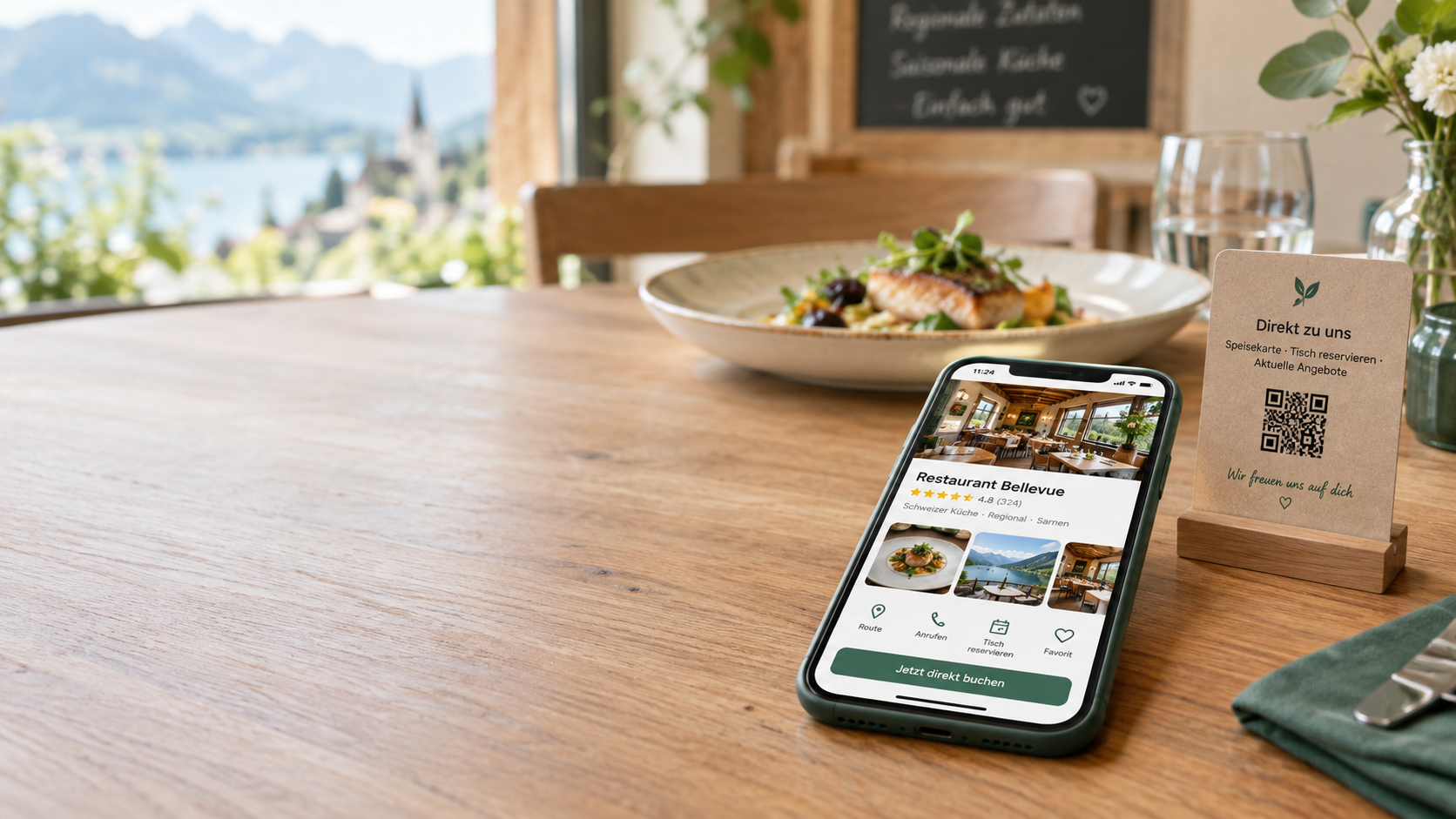
- Enable the order button by placing the link to your own ordering page there (more on this below) rather than that of a commission-based platform. It's free, it takes an hour, and it's the best return on time invested in this whole list.
Reviews: Your Most Credible Advertising
Online reviews are no longer a bonus, they're a decision criterion. Several studies agree: around 9 customers out of 10 check reviews before choosing a restaurant. And the impact is measurable — a Harvard Business School study showed that one extra star on the average rating translates into 5 to 9 % more revenue.
Three principles are enough to manage your reviews well:
- Simply ask for them. Most satisfied customers leave a review if you suggest it. A small QR code on the bill or the table, linking to your Google listing, is enough to collect them regularly.
- Reply, quickly and to everyone. Replying to reviews — positive and negative — within 24 to 48 hours strengthens your credibility and your local ranking. A measured reply to a lukewarm review often reassures more than a run of 5 stars.
- Favour freshness. Many customers only trust recent reviews. A steady flow of new reviews beats a one-off spike. At ZipZest, customer reviews are built into the platform, and you can reply to them directly from your interface — without juggling several tools.
Your Own Ordering Page: the Link You Own
This is the centrepiece. An ordering page under your name, which you control, is an asset that belongs to you — unlike your position in a platform's app.
You put that link everywhere: in the "Order" button of your Google listing, in your social media bios, in your emails, on your flyers and packaging. Every order that goes through it escapes the commission.
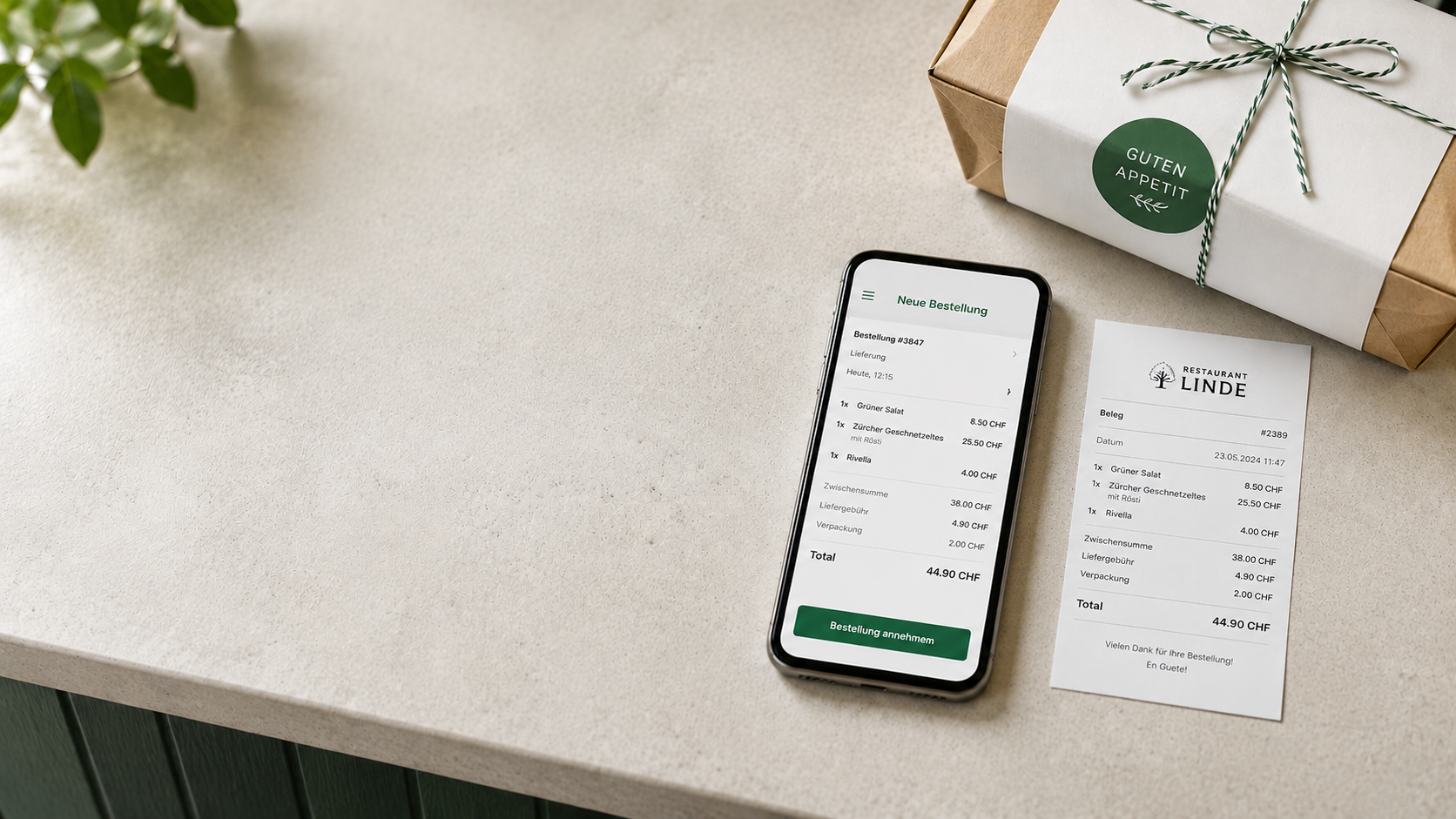
That's exactly what ZipZest offers: an online ordering page in your own branding, with no commission on your sales, and a fixed monthly subscription from CHF 79. Your customers pay via TWINT, card, Apple Pay or Google Pay, and your data stays hosted in Switzerland. You also import your menu from Just Eat or GloriaFood in 1 click, which saves you re-entering everything.
The QR Code: Turning On-Site Guests Into Repeat Orders
Your best future delivery customers are often already with you, at the table. A well-placed QR code turns them into direct customers for next time.
A few simple uses:
- On the table or the bill: "Order online next time" with the link to your page.
- On takeaway packaging: the customer who enjoyed their meal finds the link to reorder directly.
- In the window: passers-by can view your menu and order with no middleman. The idea is to recover a clientele you've already won over, without paying again for access to it. ZipZest includes a QR menu, which lets you generate these links without any extra tool.
Social Media, Without Spending Your Nights on It
You don't need to become a full-time content creator. For a restaurant, the essentials come down to three points:
- An up-to-date Instagram or Facebook account, with the ordering link in the bio.
- Regular photos of your current dishes — food is content that works naturally.
- Geolocation in your posts, to reach people in your area. Consistency matters more than perfection: a few posts a week, firmly anchored locally, beat polished but irregular output.
Loyalty: Turning a Customer Into a Regular
Attracting a new customer costs time and money. Getting an existing customer to come back costs almost nothing — and that's where long-term profitability is decided.
Two concrete levers:
- Coupons. A targeted discount (first direct order, return after X weeks) encourages customers to leave the platform for your channel. ZipZest allows customisable coupons, with limits per customer or per zone.
- Your customer database. Every direct order gives you information the platforms keep to themselves: who your customers are, what they order, how often. With a customer file (CRM), you can reach out to them again — which you can't do with a "rented" clientele. This point connects directly to the commission logic: a loyal customer who orders directly is a margin you keep, order after order.
Putting It All Together: an Example
Here's how these levers chain together, in practice.
A local resident searches "pizza takeaway" on Google Maps. Your listing appears, complete, with good photos and a 4.6 rating across about a hundred reviews. They click "Order", land on your ZipZest page, and place an order — with no commission for you. In their bag, the packaging carries a QR code with a "-10 % off your next online order" coupon. Two weeks later, they reorder directly, without going back through Google or a platform.
None of these steps is costly. Together, they move a customer from "found by chance" to "regular who orders directly".
Frequently Asked Questions
How do you attract customers to a restaurant without the platforms? By working on your local visibility: a complete Google listing, regular reviews, an ordering page under your name relayed everywhere, a QR code on site, and a simple presence on social media.
Is a Google listing really useful for a restaurant? Yes. It's often the first shop window consulted, before the website, and it's free. A complete listing with photos and recent reviews directly influences customers' choice.
How do you get more Google reviews? By simply asking satisfied customers, for example via a QR code on the bill or the table, and by replying quickly to all the reviews you receive.
Do you need a website to take online orders? Not necessarily. A dedicated ordering page, like ZipZest's, is enough: you link it to your Google listing and your social media, with no commission on sales.
In Short
The visibility you rent from the platforms, you can build part of it yourself. A well-kept Google listing, maintained reviews, an ordering page under your name, a QR code and a minimum of loyalty work: these levers are largely free and reinforce one another.
You won't replace the platforms overnight, but every customer you bring onto your own channel is a customer you keep — with the margin that comes with them.
To go further: on zipzest.ch you can create your commission-free ordering page and link it to your Google listing in a few minutes. 30-day trial, no commitment.